.webp)

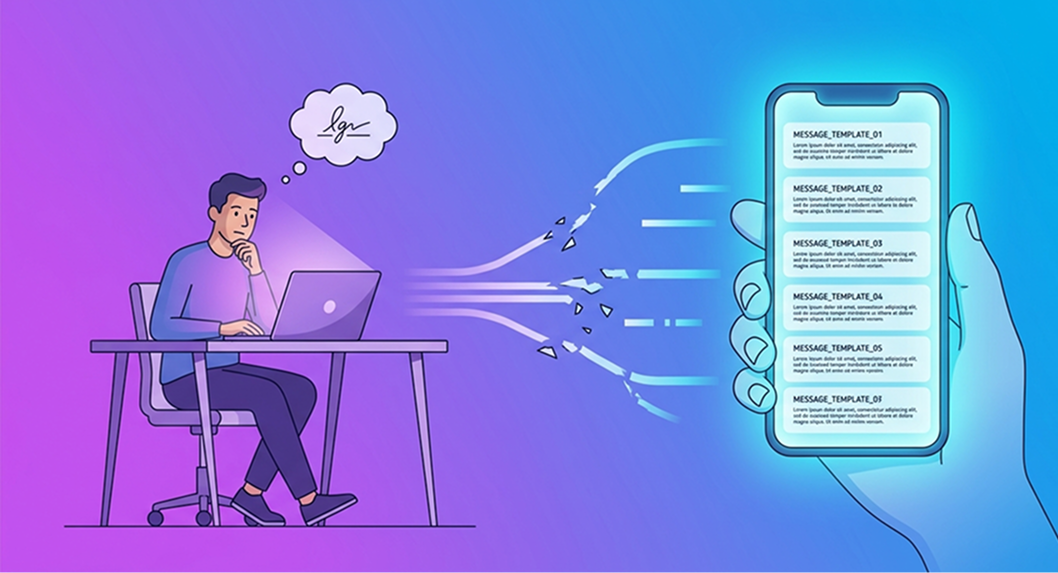
You send a message. You make sure to include their name, maybe mention their company, and even refer to something from their profile. On your screen, it looks thoughtful and well crafted. But on the other side, it lands like just another template.
This is the uncomfortable reality of modern linkedin outreach. What feels personal to the sender often feels predictable to the receiver. And the gap is only getting wider.
What makes this more complex is that personalization is no longer optional. Around 71 percent of consumers now expect personalized interactions, and most feel frustrated when communication lacks relevance . At the same time, many businesses admit they still struggle to deliver true one to one engagement .
So the problem is not effort. It is perception.
You are personalizing. But it does not feel personal.
That disconnect is where the personalization gap begins.
Personalization Gap?
The personalization gap is not about whether you added details to your message. It is about whether those details actually mean something to the person reading it.
In simple terms, it is the difference between visible personalization and felt personalization.
Visible personalization is what most outreach focuses on
- Adding first name
- Mentioning company
- Referring to a recent post
Felt personalization is what actually matters
- Relevance to current priorities
- Understanding of real challenges
- Timing that makes the message make sense now
This distinction is important because most outreach today operates at the surface level. It looks personalized but does not carry real insight.
Research shows that while personalization can increase revenue and engagement significantly, many organizations are still far from delivering true individualized communication at scale . This gap between intent and execution is exactly what shows up in your inbox as messages that feel “customized” but still generic.
Even in practitioner discussions, the same pattern appears. Many marketers report that heavy personalization efforts often feel forced and do not improve response rates significantly compared to simple, relevant messaging .
That tells you something important.
Personalization is not about how much data you include. It is about how clearly you connect that data to something meaningful.
When that connection is missing, the brain of the reader does something very fast. It categorizes your message as automated, even if it was written manually.
That moment of misalignment is the personalization gap.
Why Your Messages Feel Automated
There are several reasons why even well written messages come across as robotic. Let us look at the deeper causes.
1. Overused Message Structures
Most outreach messages follow the same structure
- Greeting
- Compliment
- Pitch
- Call to action
This structure is widely used in linkedin automation workflows. As a result, users can recognize it instantly.
Even if your message is manually written, if it follows this predictable pattern, it will feel automated.
2. Surface Level Personalization
Mentioning someone's recent post or job title is not enough anymore.
People can tell when a reference is shallow. For example
“I saw your recent post on growth. Great insights.”
This does not add value. It signals that you scanned their profile for a few seconds and moved on.
3. Lack of Context
Messages often ignore the recipient’s current priorities.
For example, reaching out to a founder with a generic sales pitch without understanding their stage of business creates disconnect.
When context is missing, the message feels irrelevant, even if it is technically personalized.
4. Over Reliance on Templates
Templates are efficient but dangerous when overused.
Many linkedin automation tools encourage template based outreach. While they save time, they also standardize communication.
When multiple people use similar templates, the uniqueness disappears.
5. No Real Intent Behind the Message
People can sense intent quickly.
If your message is focused only on selling, it feels transactional. If it is focused on starting a conversation, it feels human.
This difference is subtle but powerful.
Personalization Impact in Outreach automation
Modern outreach strategies often create an illusion of personalization.
You might use advanced tools, dynamic fields, and segmentation. But the output still feels generic.
Why does this happen
Because personalization is being treated as data insertion rather than insight creation.
For example
- Inserting company name is data
- Understanding company challenges is insight
Common Mistakes
Some most common mistakes which impact the personalization gap are.
Writing for Scale Instead of Relevance
When the goal is to send hundreds of messages daily, quality naturally drops.
Instead of thinking about how many messages you can send, think about how many meaningful conversations you can start.
Using Generic Compliments
Phrases like
- “Impressive profile”
- “Great work”
These have lost their impact because they are used too often.
Ignoring Tone Matching
If your recipient writes casually, a very formal message feels out of place.
If they are highly professional, an overly casual tone can feel disrespectful.
Matching tone is an underrated aspect of personalization.
Sending Messages at the Wrong Time
Timing plays a big role.
Even a well crafted message can fail if it reaches someone when they are busy, distracted, or not interested in that topic.
How to Personalize Your message
Closing the personalization gap requires a shift in approach.
Focus on One Insight Per Message
Instead of trying to cover everything, focus on one meaningful observation.
For example
- A recent product launch
- A hiring trend
- A shift in their content topics
This shows genuine attention.
Ask Better Questions
Good questions create engagement.
Instead of pitching directly, ask something relevant and thoughtful.
For example
- “How are you currently approaching lead qualification?”
- “What has been your biggest challenge with scaling outreach?”
This shows genuine attention.
Use Natural Language
Write the way you speak.
Avoid overly polished or scripted sentences. Slight imperfections actually make your message feel more human.
Keep It Short but Meaningful
Long messages often feel like sales scripts.
A short message with clear intent is more effective.
Personalize the First Line Deeply
The first line determines whether the message gets read.
Invest more effort here instead of spreading personalization across the entire message.
Role of Tools and Where They Go Wrong
Tools are not the problem. Misuse of tools is.
Many professionals rely heavily on linkedin automation tools without understanding their limitations.
Automation is meant to support personalization, not replace it.
Where things go wrong
- Using the same template for all segments
- Not updating messaging based on responses
- Ignoring analytics and feedback
Tools should enhance your strategy, not define it.
How Flowkon Helps Close the Personalization Gap
At Flowkon, the focus is not just on sending messages but on creating meaningful interactions.
The platform is designed to balance automation with personalization.
Here is how it helps
Smart Segmentation
Instead of broad targeting, you can create refined audience groups based on behavior and intent.
Context Driven Messaging
Flowkon allows you to build workflows that adapt based on user actions. This keeps messages relevant at every stage.
Controlled Automation
You can automate repetitive tasks while keeping critical parts of the message human driven.
Performance Insights
Understanding what works and what does not helps you continuously improve your outreach strategy.
The goal is simple. Make automation feel invisible and communication feel natural.
Practical Examples of Better Personalization
Let us compare two approaches.
Example One
Generic message
“Hi John, I saw your profile and was impressed. We help companies improve their outreach. Would love to connect.”
Personalized version
“Hi John, noticed your team recently expanded your sales roles. Are you exploring new ways to manage outreach at scale or sticking with your current setup?”
The second message feels more relevant because it is based on a specific observation.
Example Two
Generic message
“Hi Sarah, I saw your post on marketing. Great insights.”
Personalized version
“Hi Sarah, your point about content fatigue in your recent post stood out. Have you seen any channels performing better despite that trend?”
This creates a conversation instead of a pitch.
Final Words
The personalization gap is not a technical problem. It is a thinking problem.
Most outreach fails not because of lack of effort, but because of misplaced effort. People focus on adding more variables instead of adding more understanding.
If your messages feel automated, the solution is not to remove automation completely. The solution is to use it more intelligently.
Start by slowing down. Spend a little more time understanding your audience. Write messages that you would actually respond to.
Over time with Flowkon, this approach will not only improve response rates but also build stronger professional relationships.


%20(1).png)

.png)



.svg)

